
Artificial turf installation in Elberta, Foley and Baldwin County, AL
Artificial turf is a built system, not a rolled-out carpet: the old surface comes out, a compacted stone base goes in, and the turf is fastened, seamed and filled on top. This page explains artificial turf installation for homeowners in Elberta, Foley and Baldwin County, including what it costs you in heat and upkeep compared with sod, and what to ask any installer. Green Rock Solutions is a landscaping company in Elberta, AL.
Get a quote
How is artificial turf installed?
The installer removes the existing sod and dirt, sets a rough grade so water drains, lays and compacts a stone base, adds fabric, then fastens the turf, joins the seams and brushes in infill. A turf guide from Star Nursery says to lay 3-4 inches of road base or white chat and compact it to 90 percent. That guide comes from a Nevada retailer, not from Alabama.
- 01 Removes the existing sod and dirt
- 02 Sets a rough grade so water drains
- 03 Lays and compacts a stone base
- 04 Adds fabric
- 05 Fastens the turf, joins the seams and brushes in infill
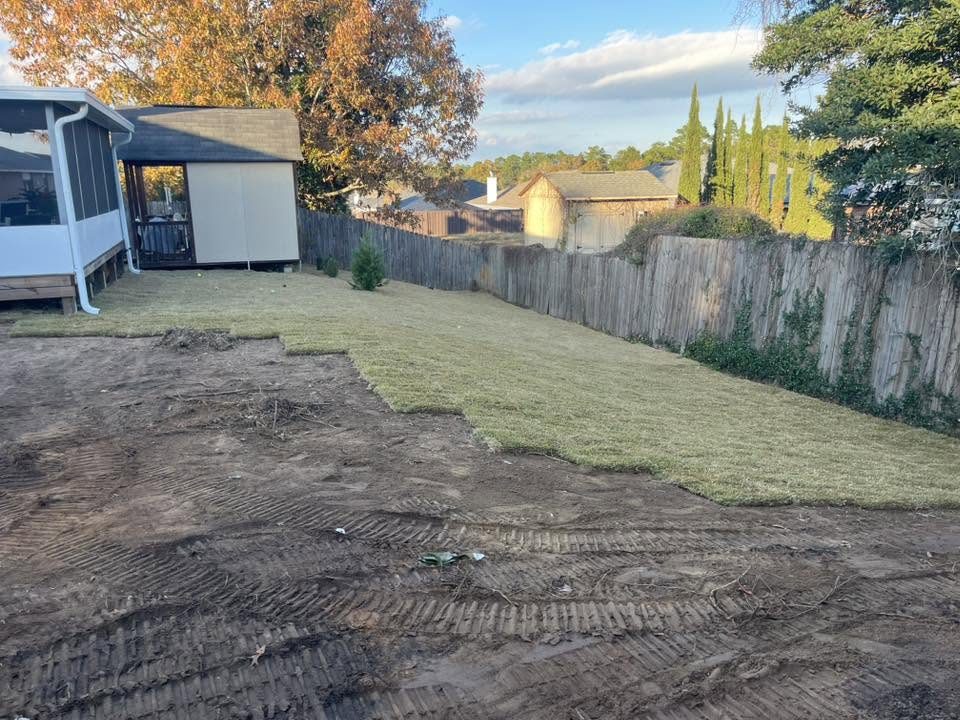
This page is where our turf installation lives, and a guide to what a good turf job involves. For the wider picture of yards on the coast, see our landscaping page.
What goes
under the turf
Most of the work, and most of what decides how the turf performs, happens below the surface. The steps below follow the Star Nursery guide and one city rule. They describe what a crew does, not a job to try yourself.
Rain is the part that matters most here. The guide adds that in an area where soil shifts or expands when saturated with water, the weed barrier goes underneath the base. Ask any installer how they handle a yard that stays wet after a storm.
-
1
Remove the old surface.
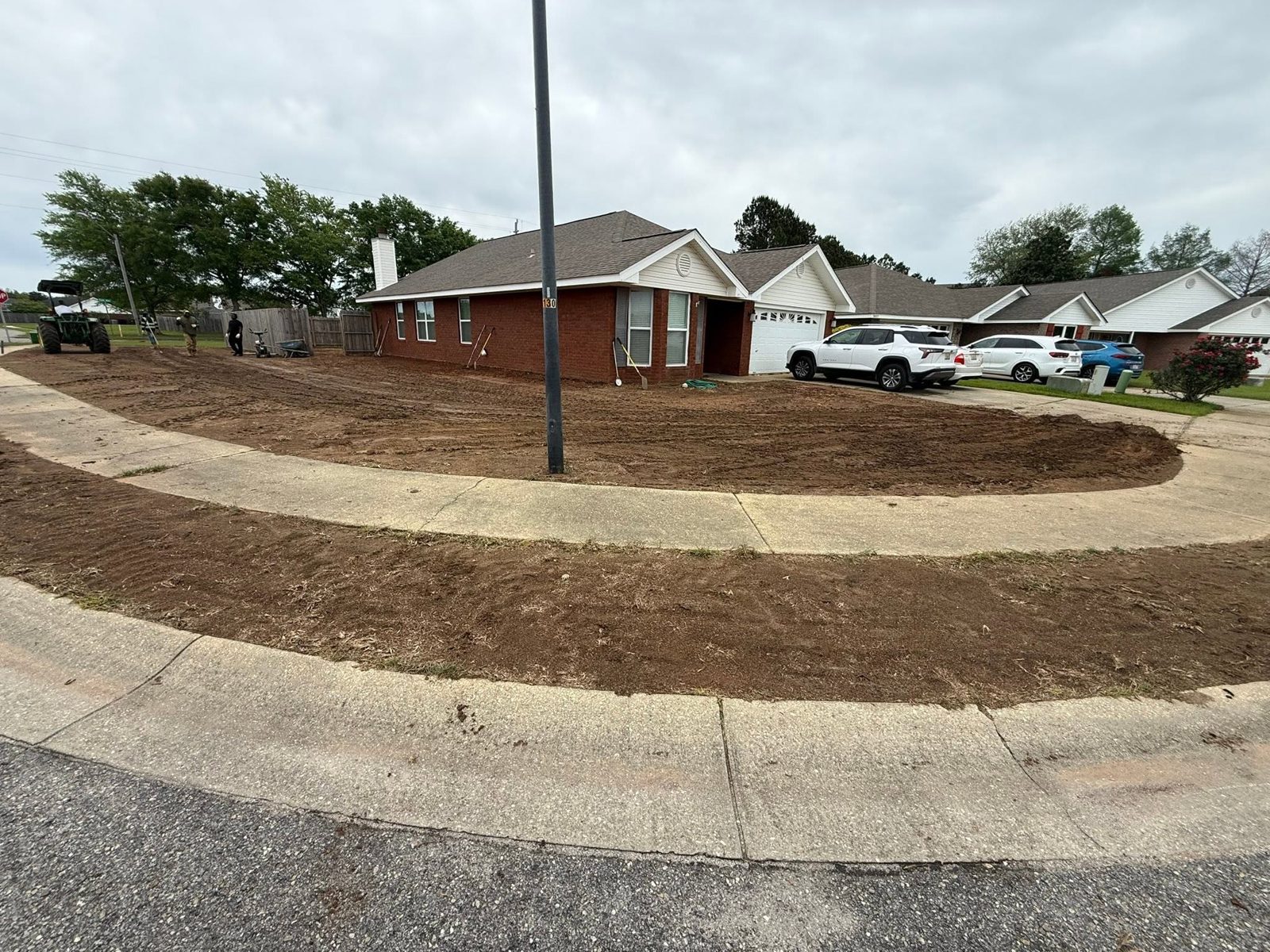
The guide says to remove 3-4 inches of existing sod and/or dirt and to cap or remove any sprinklers. The City of Newport Beach, California, requires sod or existing groundcover to be removed before artificial turf goes in.
-
2
Set a rough grade.
The same guide says to set a rough grade for drainage, so water has somewhere to go.
-
3
Build the base.
Road base is the compacted stone layer the turf sits on. The guide calls for 3-4 inches of Type II road base or white chat, compacted to 90 percent with a plate compactor. Newport Beach sets only a floor: a compacted and porous base at least two inches deep.
-
4
Add fabric.
The guide says to install weed barrier fabric with seams overlapped 6-12 inches.
Seams, edges and infill
Turf is unrolled in strips, so joins called seams are common. Infill is the sand or granule layer brushed into the blades so they stand up and hold the turf down.
Seams
Seams. The Star Nursery guide uses turf tape under the joint and says not to overlap seams. Newport Beach says seams must be glued and not sewn. Methods differ, so ask which one the installer uses and why.
Edges
Edges. The guide places a nail every 3-4 inches along the perimeter. Newport Beach requires turf to be anchored at all edges and seams.
Infill
Infill. The guide says to power broom before infilling, and lists 1-2 lbs. per sq. ft. for the turf products in that guide. Your product's maker sets its own amount.
Turf or sod in a hot, humid, rainy yard?
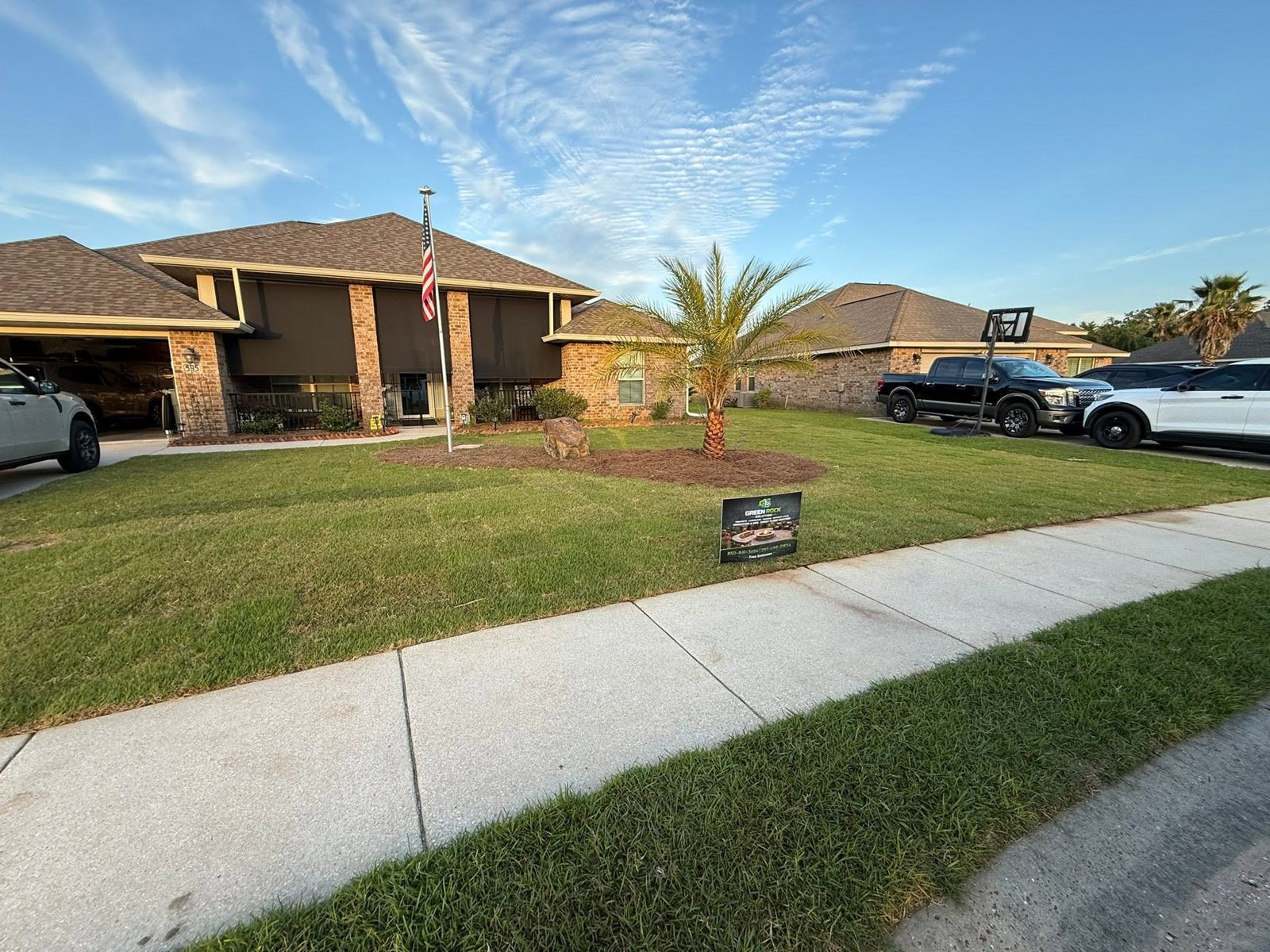
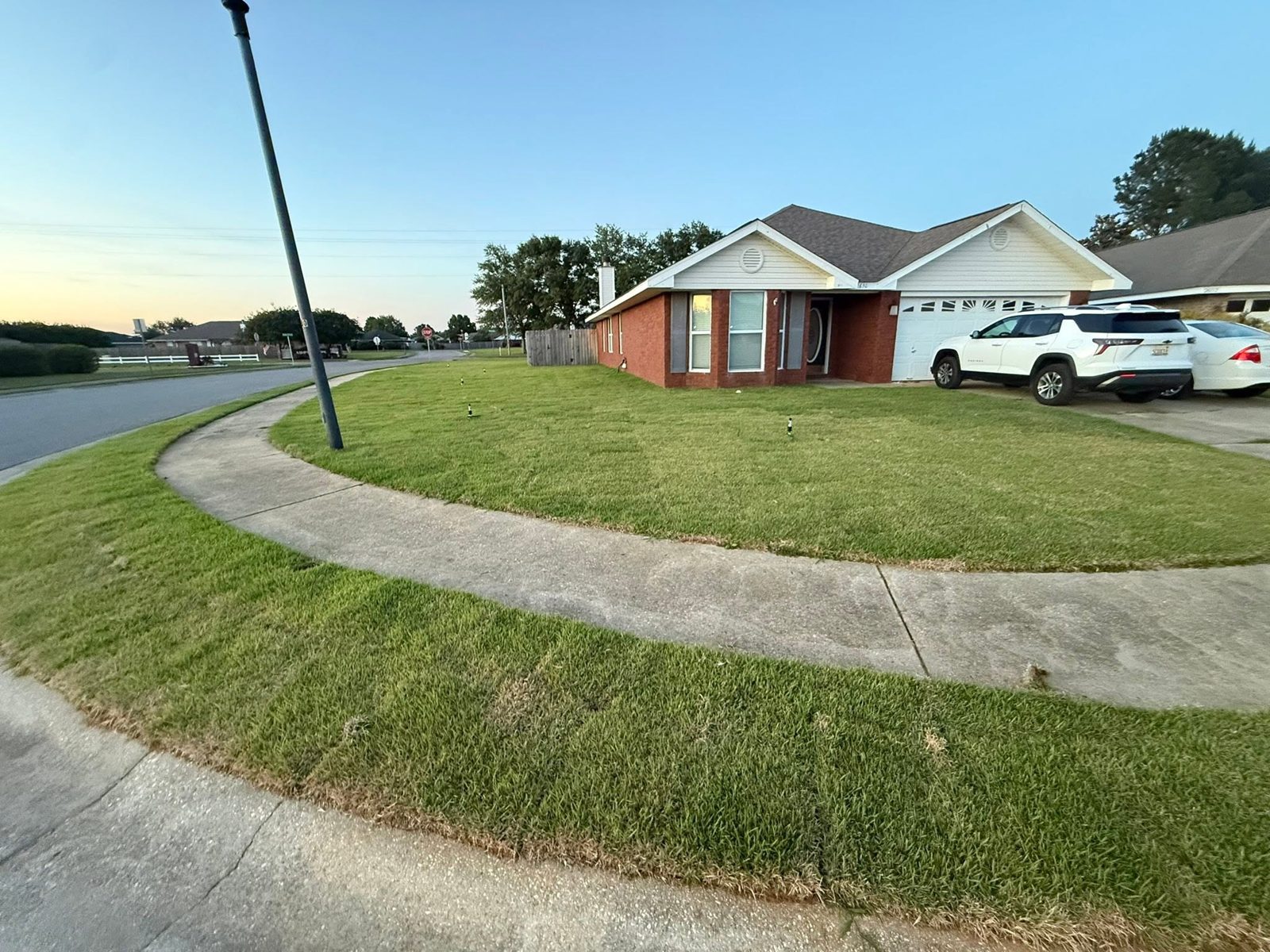
Heat is the honest weak point. University of Florida researcher Marco Schiavon said artificial turf surfaces can reach 79°C (174°F), "hot enough to cause burns on human skin," while natural turf stays closer to 39°C (102°F) thanks to evapotranspiration and shade. That is Florida, not Alabama, and we found no Alabama measurement.
The same UF/IFAS article says Florida "is wetter, more humid and prone to flooding rather than drought." It is the nearest humid-climate source we found.
Watering does not fix it for long. A Pennsylvania State University study of sports surfaces found that low temperatures reached by irrigation could not be maintained for as long as a standard sporting event. That is a 2009 study on sports turf, so treat it as a mechanism, not a lawn forecast.
Artificial turf
Natural sod
That is Florida, not Alabama, and we found no Alabama measurement.
Surface heat
Up to 79°C (174°F) in the Florida figure above
Closer to 39°C (102°F) in the same source
Rain and drainage
Colorado State Extension says water does infiltrate the soil under the turf; the base and grade decide how well
Not compared in our sources
Upkeep
Colorado State Extension says leaves and wind-blown debris must be removed and pet waste is problematic; Cornell lists checking and replenishing infill
Mowing and watering; see sod installation
Lifespan
We found no sourced home-lawn figure. Cornell lists 8-10 years before replacement for synthetic sports fields, which is not a lawn
Not compared in our sources
Sources: UF/IFAS, July 2025; Colorado State University Extension; Cornell University.
Colorado State Extension also says turf "fails to provide the traditional landscape with the many environmental benefits of living grass." That is a Colorado source, and it is one view among several.
What to ask
any installer
A good installer answers each of these in plain words. A vague answer to the drainage question is the one to press on in a yard like ours.
- What is the base, how deep is it, and how is it compacted?
- How will water leave this yard, and what happens where the soil stays wet?
- Where does the weed barrier go, and why?
- Are the seams taped or glued, and where will they fall?
- How is the edge anchored?
- What infill goes in, and how much?
- Who will do the work, and is it the company I am hiring? Newport Beach notes that site preparation is extensive and should be done by a professional installer.
- Is the price in writing before any work starts?
What Green Rock Solutions can help with
We lay out and plant front and back yards in Elberta, Foley and Baldwin County. A turf job sits alongside that work: you tell us which part of the yard you want covered, and we talk through the base, the drainage and the edges with you.
Artificial turf installation questions
Does artificial turf get hot in Alabama?
We found no Alabama measurement. A University of Florida researcher reports surfaces reaching 79°C (174°F) against 39°C (102°F) for natural turf. That is a Florida source.
How long does artificial turf last?
We did not find a sourced figure for home lawns. Cornell lists 8-10 years before replacement for synthetic sports fields, which is a different use.
Does artificial turf need maintenance?
Yes. Colorado State Extension says leaves and wind-blown debris must be removed and that pet waste is problematic.
Get a quote
Tell us your town and the part of the yard you have in mind. Send the form, and we'll get back to you about your project.
- Call
- (251) 496-0834
- Hours
- Monday to Friday, 9:00 AM to 5:00 PM
- Address
- 11194 County Road 83, Elberta, AL 36530
- Service area
- Elberta, Foley and Baldwin County, AL
Free estimates. No obligation.