
Sod installation in Elberta, Foley and Baldwin County, AL
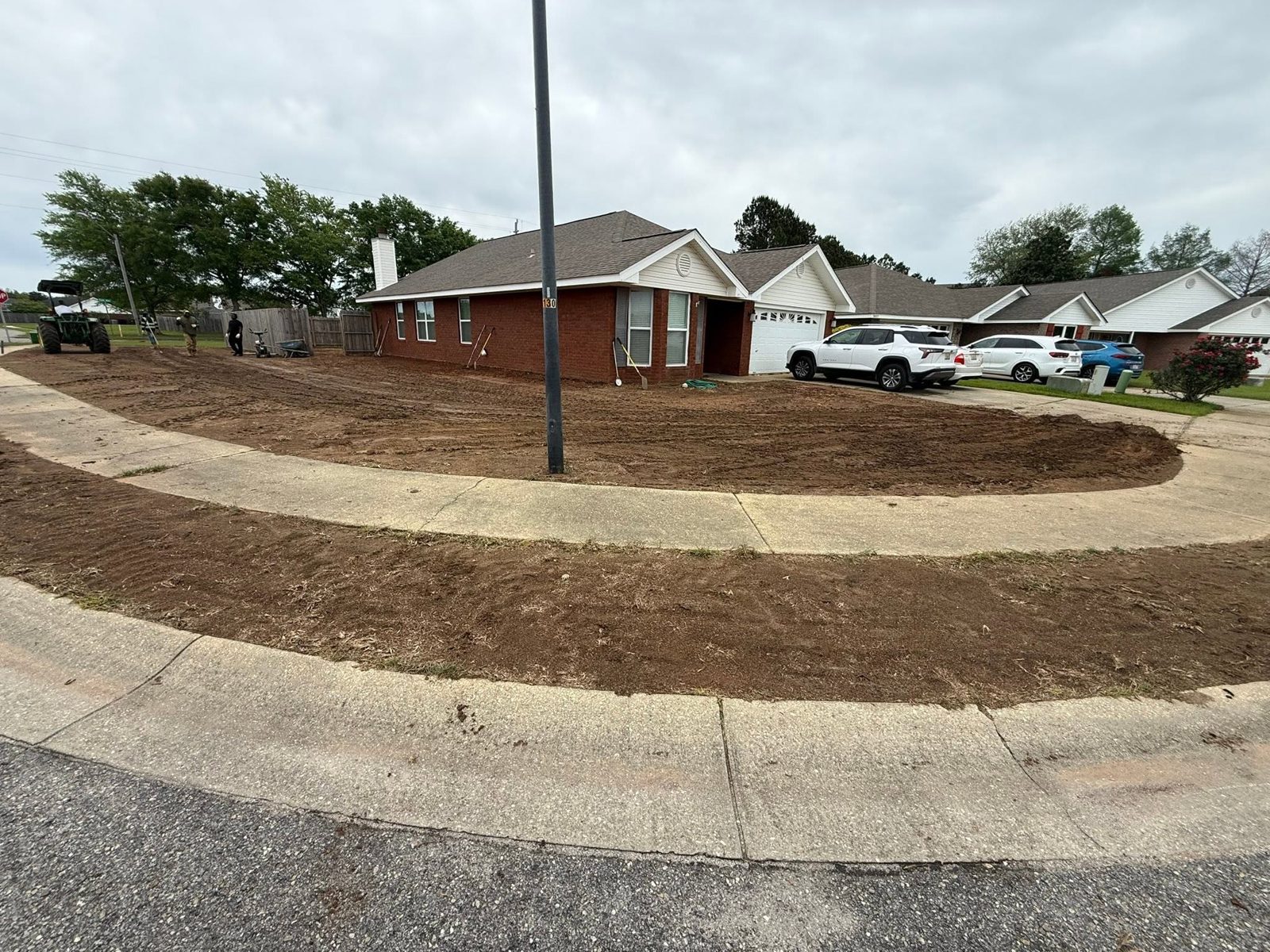
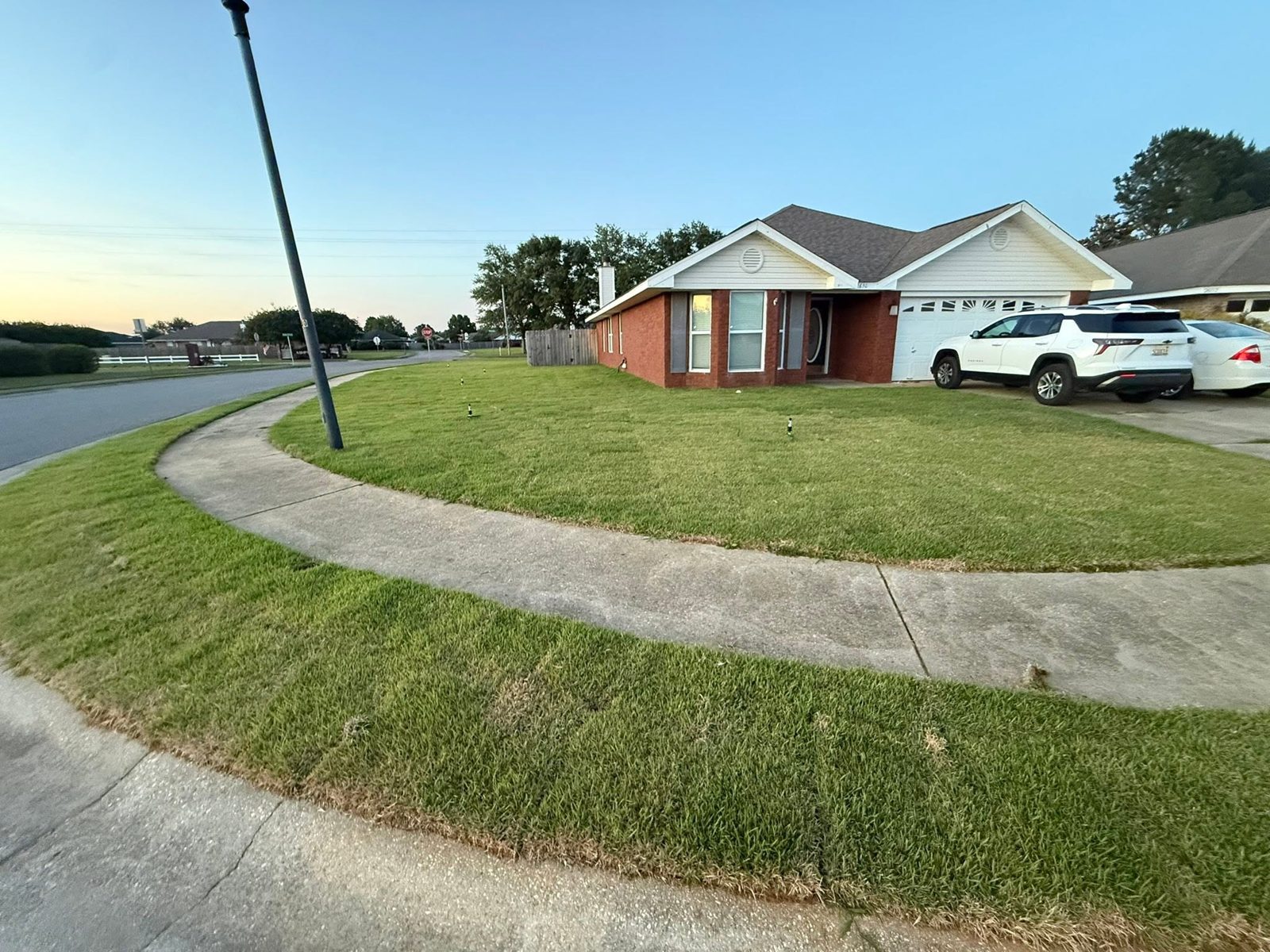
Sod takes when it goes onto bare, moist, prepared soil, is laid tight in a staggered pattern, and is watered every day until it roots. Green Rock Solutions is a landscaping company in Elberta, AL, and this page explains sod installation on the Alabama Gulf Coast: which grass to pick, how the ground is prepared, how the sod is laid and how to water it.
Sod installation is part of our landscaping work. This page is a guide to what a good sod job involves. For the wider picture of coastal yards, see our landscaping page.
Get a quote
How is sod installed on the Gulf Coast?
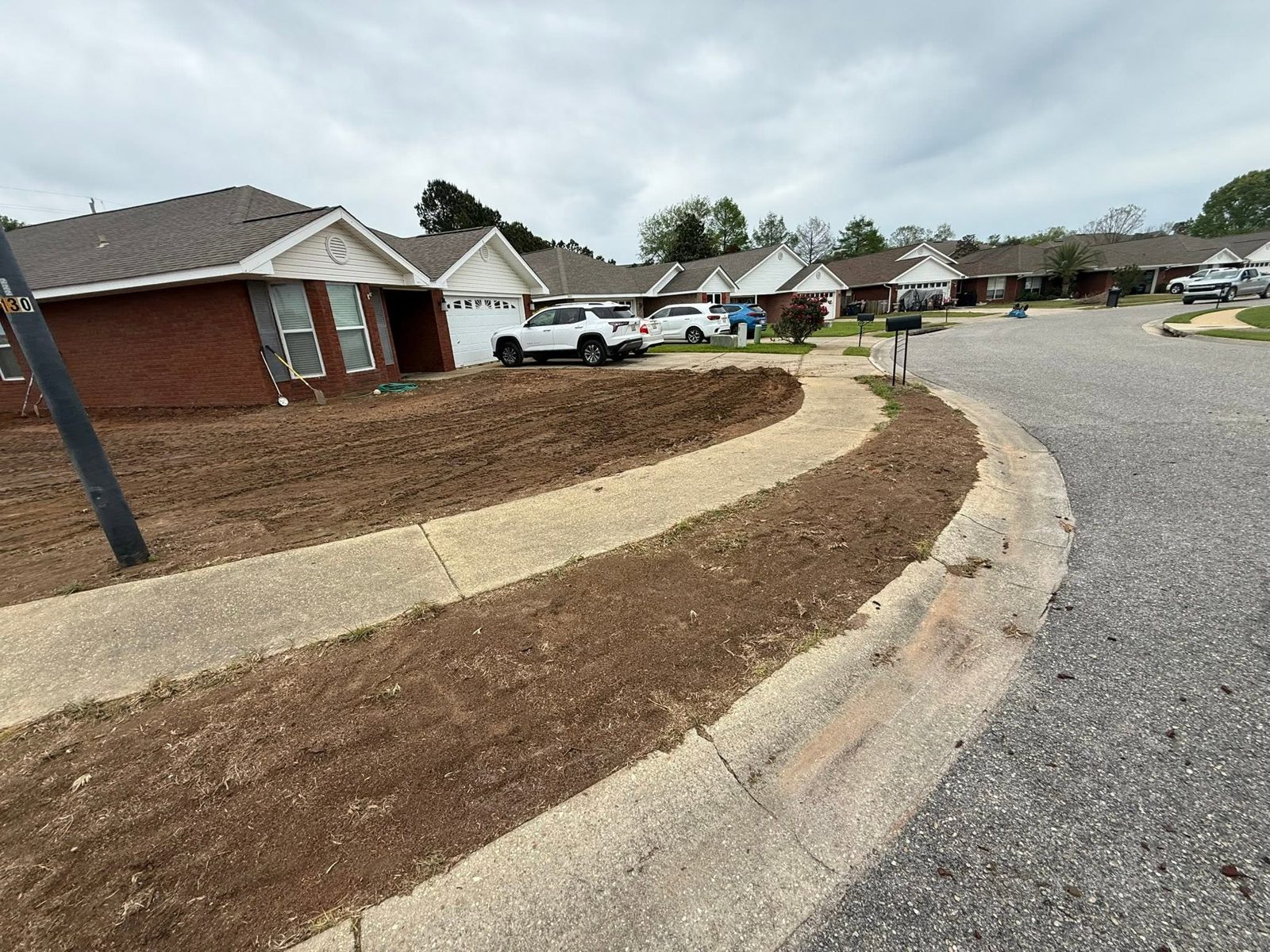
Prepare the bed first: till the soil, clear debris and rocks, and use a soil test to decide what lime or fertilizer it needs. Then lay the sod over bare, moist soil in a staggered pattern, roll it, and water it. The Alabama Cooperative Extension System says to water new sod daily without rain until it is established and well rooted.
Which grass suits a Baldwin County lawn?
Sod is only as good as the grass you choose. The Alabama Cooperative Extension System compares four home-lawn grasses in a table, with sun hours, salt tolerance and how each can be planted. Its sunlight key: full sun is at least 8 hours, partial is at least 6, and shade is at least 4.
St. Augustinegrass
Full to shade
Good
Sprigs, plugs, sod
Zoysiagrass
Full to partial
Good
Sprigs, plugs, sod, seed
Bermudagrass
Full
Good
Sprigs, plugs, sod, seed
Centipedegrass
Full to partial
Poor
Sprigs, plugs, sod, seed
Source: Alabama Cooperative Extension System, Right Plant Right Place, November 2023.
Two things stand out for a coastal yard. First, centipedegrass is rated poor for salt. Extension's centipedegrass guide says it "does not tolerate traffic, high-phosphorous soils, low-potassium soils, high soil pH, excessive thatch, salt." Second, the St. Augustinegrass guide says it "has a high salt tolerance, which makes it suitable for coastal areas" and "is shade tolerant and can produce a lawn in shady areas for a few years." It also says St. Augustine grows best in central to southern Alabama yards.
Zone 9a and coastal salt are covered on the landscaping page, so we won't repeat them here. A yard that gets under six hours of sun narrows the list to St. Augustinegrass.
What to sort out before the sod arrives
Two checks come before any grass is ordered.
- Soil test. Extension says "a soil test is the only way to know how much of what fertilizer or lime a growers needs to apply to an area." The result tells you what to work into the bed.
- Shade. Extension says "too much shade is a common reason for poor growing turf." Match the grass to the hours of sun the lawn really gets.
Sod is the fast route. Extension puts it this way: "If a grower is wanting instant turf, solid sodding is the way to go." For St. Augustinegrass, it calls sodding "the best and most common option for establishing a lawn."
If any digging is involved, the landscaping page explains why to call 811 first.
Step by step: preparing the bed and laying sod
These steps follow Alabama Extension's St. Augustinegrass and centipedegrass guides.
Timing depends on the grass. For St. Augustinegrass, Extension says the best time to plant is its active growth period, "normally between May and August." We did not find an Alabama Extension sod calendar for the other three grasses, so check with a local supplier before you plan a date.
-
1
Till the area.
Till the area to be planted, then rake and remove plant debris and rocks.
-
2
Add what the soil test says.
Lime or fertilizer is worked in to a depth of 4 to 6 inches.
-
3
Lay the sod over bare, moist soil.
Use a staggered pattern, like bricklaying.
-
4
Keep the pieces tight.
Extension says to lay them "tightly together to avoid large cracks in the turfgrass."
-
5
Roll the sod.
Rolling smooths the surface.
-
6
Water it thoroughly.
Extension says this ensures faster rooting.
Watering new sod
Extension's guidance for new sod is plain: "Water newly sodded areas daily in the absence of rain until the sod is established and well rooted." Its centipedegrass guide says to water the whole sodded area "at least once a day."
The rule is tied to rooting, not to a set number of days, and we found no sourced day count. If you also want an automatic system, see irrigation installation.
Mistakes that stop sod taking
Laying sod on the wrong grass for the spot.
Centipedegrass near salt, or a sunny-only grass in shade. Check the table above.
Skipping the soil test.
Without it you are guessing at lime and fertilizer.
Leaving cracks.
Extension says to keep pieces tight to avoid large cracks.
Laying on dry soil.
Extension says to lay on bare, moist soil.
Letting it dry out.
Extension says daily watering without rain until it is well rooted.
What Green Rock Solutions can help with
We lay out and plant front and back yards in Elberta, Foley and Baldwin County. A sod job fits into that work: you tell us which part of the yard you want grassed, and we talk through the grass choice and the bed with you.
Sod installation questions
Which grass is best for sod on the Alabama Gulf Coast?
It depends on sun and salt. Alabama Extension rates St. Augustinegrass, zoysiagrass and bermudagrass as good for salt tolerance and centipedegrass as poor.
How often should I water new sod?
Daily without rain until it is established and well rooted, per Alabama Extension.
When is the best time to lay sod?
For St. Augustinegrass, Extension says May to August. We did not find a sod calendar for the other grasses.
Get a quote
Tell us your town and the part of the yard you want grassed. Send the form, and we'll get back to you about your project.
- Call
- (251) 496-0834
- Hours
- Monday to Friday, 9:00 AM to 5:00 PM
- Address
- 11194 County Road 83, Elberta, AL 36530
- Service area
- Elberta, Foley and Baldwin County, AL
Free estimates. No obligation.