Outdoor kitchen installation in Elberta, Foley and Baldwin County, AL
An outdoor kitchen is a structure, a counter, the appliances on it and the utilities that feed them, and the utilities are licensed-trade work. Green Rock Solutions is an outdoor living company in Elberta, AL. This page explains what goes into an outdoor kitchen, what a grill manufacturer asks of the structure around it, and which parts need a licensed professional and a permit. This is how we talk an outdoor kitchen through with you, and a planning guide. The general permit points for a yard project are on our outdoor living page, so we keep them short here.
Get a quote
What goes into an outdoor kitchen?
An outdoor kitchen has five parts: the base and frame, the counter, the appliances, the utilities that serve them, and the ventilation that keeps gas from collecting in the island. Each part has a different person responsible for it, and the utilities are not the same trade as the structure.
Base and frame
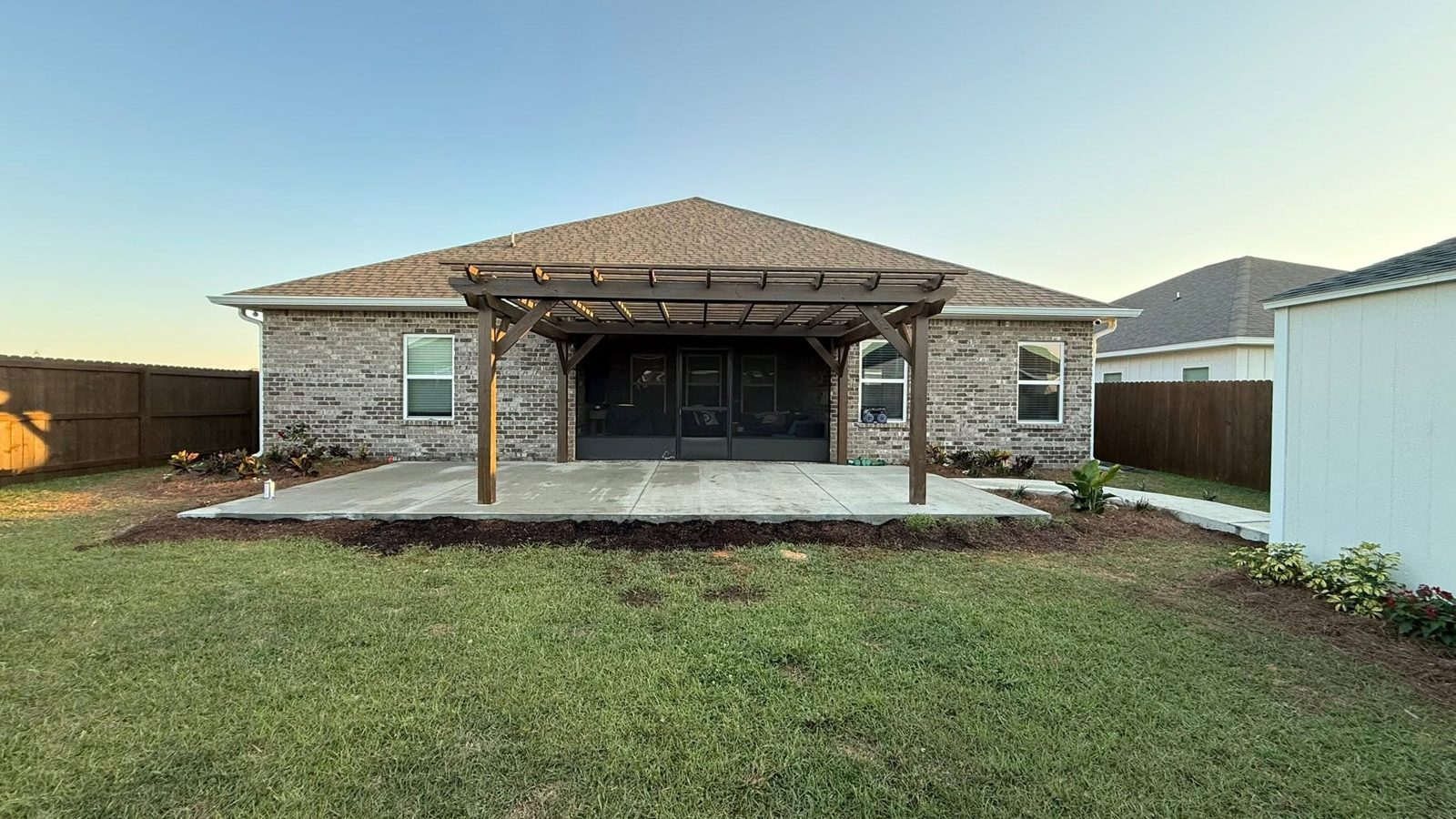
The slab or pad and the island walls
Structure work, see the section below
Counter
The surface over the frame
Structure work
Gas line
Natural gas or propane to the grill
A licensed gas fitter, with a permit where required
Electrical
Power for lights, outlets or a fridge
A licensed electrician, with a permit where required
Plumbing
Water to a sink, drain from it
A licensed plumber, with a permit where required
Vents
Openings in the island cavity
Set by your local code authority
Outdoor kitchen components and materials
The common materials used for each part of an outdoor kitchen.
Grill island structure
Concrete masonry blocks (CMU), galvanized steel framing, reinforced concrete, cement backer board
Countertops
Granite, concrete, porcelain slabs, outdoor-rated natural stone
Exterior finishes
Natural stone veneer, manufactured stone, brick, stucco, porcelain tile
Built-in grills
Outdoor-rated stainless steel gas or charcoal grills, insulated jackets where required
Ventilation
Manufacturer-specified island ventilation openings, stainless steel vent panels, outdoor-rated exhaust hoods for covered installations
Gas connections
Approved natural gas or propane piping, regulators, shutoff valves, listed connectors
Electrical systems
Outdoor-rated GFCI-protected outlets, appropriate wiring and conduit, LED lighting, dedicated circuits where needed
Plumbing
PEX or approved water supply lines, PVC or other approved drain piping, shutoff valves, outdoor sinks and faucets
Storage
Stainless steel access doors, drawers, cabinets, trash bins
Outdoor refrigeration
Outdoor-rated stainless steel refrigerators, beverage coolers, ice makers
Foundation and flooring
Reinforced concrete slabs, concrete pavers, textured concrete, slip-resistant porcelain tile
Materials vary by project. We go over the options with you at your free estimate.
What the grill manual asks of the structure
The first thing to know is that the manual for your grill sets the rules for the island, and manuals disagree with each other.
Two examples show how far apart they sit.
Blaze.
Its LTE2 instruction book says the grill "must be installed in a NON-COMBUSTIBLE ENCLOSURE ONLY." The same book says to keep the grill "at least 14” from sides & 16” from back from any combustible material such as wood, gyprock, paper and plants."
DCS.
Its built-in manual shows 18 inches to combustible construction and 3 inches to non-combustible construction, which is also its minimum lid clearance.
Noncombustible means the island walls will not burn, such as metal studs and cement board instead of wood. The DCS manual adds a warning that catches people out: "If your island is made of stucco over the top of wooden studs, the wood can not be inside the 18 inch clearance zone to combustible, even though the stucco is what is touching the grill area."
Who decides what counts? Blaze says the call "is made by the local fire marshal, building inspector or the local safety authority having jurisdiction." Both manuals in our research are older files (the DCS PDF was created in 2018, the Blaze file last modified in 2020), so pull the current manual for the exact model you buy before anything is framed.
Why the island needs vents
A gas grill built into an island sits above a closed cavity, and gas can collect in it. Blaze puts it bluntly: "Failure to adequately vent your outdoor kitchen cavity could result in an explosion or fire."
Where the vents go depends on the fuel.
-
Propane.
Blaze says "LP gas is heavier than air and will settle to the lowest levels of the outdoor kitchen," so openings sit low.
-
Natural gas.
Blaze says natural gas "is lighter than air and will rise to the highest levels of the outdoor kitchen," so openings sit high.
How much venting is enough is not a number we can give you. Blaze tells readers to "consult with your local licensed professional and local code for adequate venting requirements." Decide your fuel early, because it changes the layout of the island.
Which parts need a licensed trade and a permit
Gas, electrical and plumbing connections are not DIY jobs, and they are not something we are telling you how to do. Gas and electrical work each have a state licence behind them, and the county permits plumbing.
Gas.
The Alabama Plumbers and Gas Fitters Examining Board says "The journeyman gas fitter shall have in his or her possession a current annual certificate." Blaze says to "use a licensed contractor or installer" even to convert a grill to a different gas type.
Electrical.
The Alabama State Board of Electrical Contractors says the scope of licensing "includes installation, design, plan, lay-out and directly supervising electrical construction activities."
Plumbing.
Baldwin County lists "Mechanical/HVAC, electrical, and plumbing work" among the work it issues permits for.
Permits depend on where your property sits.
Baldwin County's building-permit jurisdiction "includes the unincorporated areas of Baldwin County and the Towns of Elberta, Magnolia Springs, and Perdido Beach." For any other town, such as one with its own building department, the county says to "contact that municipality’s building department for permitting requirements and assistance." Blaze's own manual says "A Permit may be required for outdoor kitchen construction."
We did not find a published Baldwin County or Foley rule that names outdoor kitchens or their gas lines. Ask the building department that covers your address, and ask your licensed trades which permits they will pull. This is general information, not Green Rock Solutions's reading of the law.
What to decide before design starts
A kitchen design goes faster when these are settled first.
- Fuel. Natural gas or propane, since vents and the gas line follow from it.
- Appliance models. Get the installation manual for each one. The cutout and the clearances come from it.
- Cover or open sky. Blaze says "Do not locate the BLAZE GRILL where an overhang or awning may cover it," so check your grill's manual before planning a roof over the cooking line.
- Where utilities run. Gas, power and water have to reach the island, and the licensed trades will want to know the route.
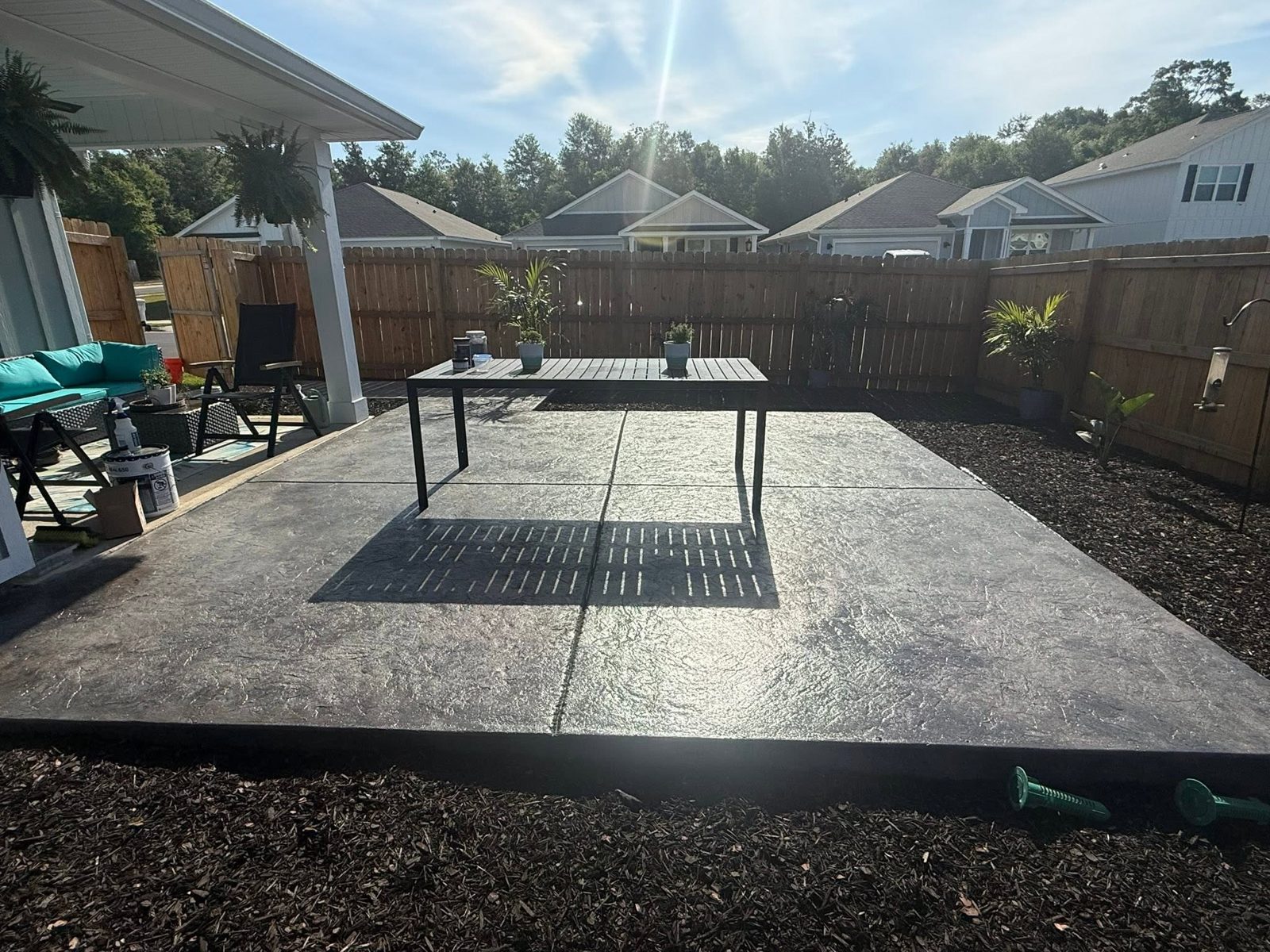
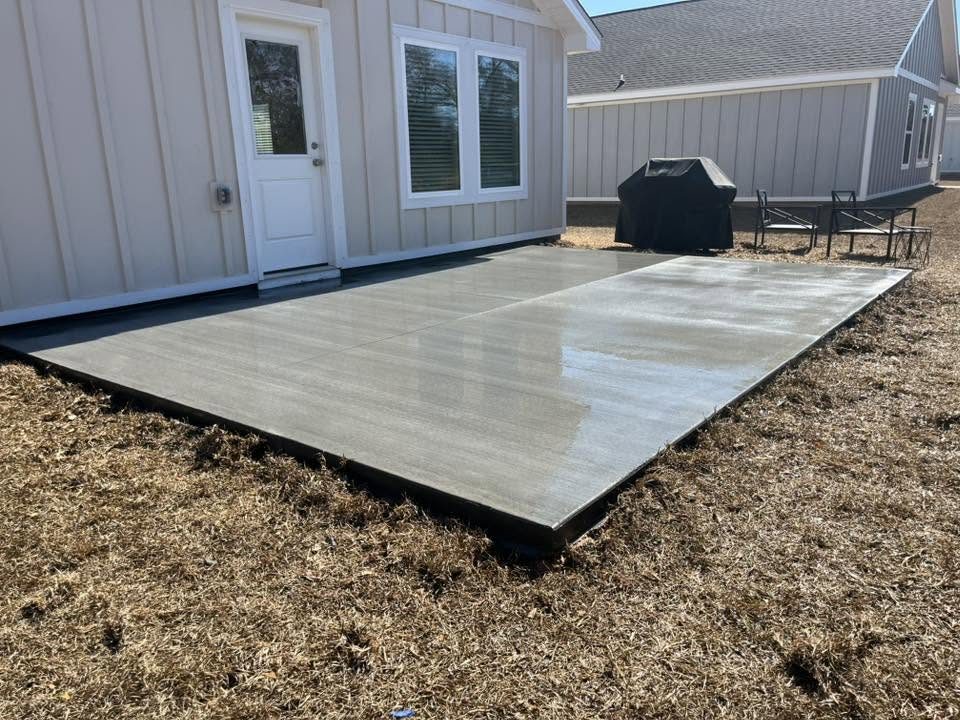
- The base. The island needs a firm, level surface. Our concrete page covers the slab side of that.
Outdoor kitchen questions
Does an outdoor kitchen need a permit?
It can. Blaze says "A Permit may be required for outdoor kitchen construction," and Baldwin County permits electrical and plumbing work. Ask the building department that covers your address.
Can I run the gas line myself?
Alabama has a state certificate for gas fitters, and Blaze says to use a licensed contractor or installer for gas work such as conversion. Hire a licensed gas fitter for the line.
How far should a grill sit from wood?
It depends on the grill. Blaze lists 14 inches from the sides and 16 inches from the back, and DCS lists 18 inches to combustible construction. Use the manual for your model.
Plan your outdoor kitchen
Tell us your town, the appliances you are considering and whether you want natural gas or propane. Send the form, and we'll get back to you about your project.
- Call
- (251) 496-0834
- Hours
- Monday to Friday, 9:00 AM to 5:00 PM
- Address
- 11194 County Road 83, Elberta, AL 36530
- Service area
- Elberta, Foley and Baldwin County, AL
Free estimates. No obligation.